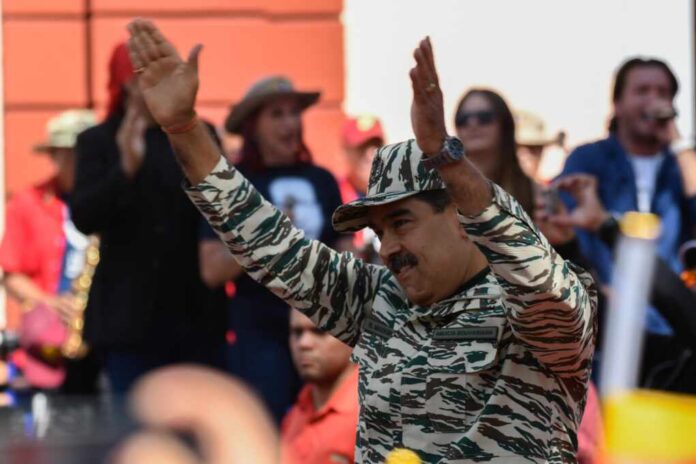
Venezuelan President Nicolás Maduro on October 31, 2025, publicly stated that the generational category “Generation Z” is an “invention” of Western psychological warfare. Speaking at the International Space Congress in Caracas, the President promoted a state-sponsored alternative, the “Great Generation,” to represent the nation’s youth, a move that aligns with the government’s ongoing information control and censorship campaigns.
Story Highlights
- Venezuelan President Nicolás Maduro publicly rejected “Generation Z,” labeling it an invention of Western psychological warfare, in a speech delivered on October 31, 2025, in Caracas.
- The President promoted an alternative, state-sponsored demographic, the “Great Generation,” encompassing youth aged 12–22.
- The remarks occurred amid increased regime efforts to control information and intensify censorship, including restrictions on Western social media platforms.
- International human rights organizations continue to document reports of human rights abuses and educational failures in the country.
Maduro’s Remarks on Generational Identity
On October 31, 2025, Venezuelan President Nicolás Maduro addressed the International Space Congress in Caracas, where he rejected the concept of “Generation Z.” President Maduro asserted that foreign powers utilize social media platforms to influence youth and promote what he termed as “Western imperial influence.” He stated his administration’s goal is to promote a state-sponsored narrative of a uniquely Venezuelan “Great Generation,” identified as the cohort aged 12–22.
The government quickly disseminated Maduro’s statements through official social media and government-controlled channels, featuring images of the president interacting with young people. This approach is consistent with the government’s broader strategy of restricting Western social media and promoting state-approved content to shape public discourse and generational narratives.
Gobierno Bolivariano Venezuela (@gobdevenezuela) • Instagram
Context: Government Information Control and Social Dynamics
The government’s effort to redefine generational identity takes place against the backdrop of Venezuela’s extended period of socialist governance, which began in 1998 with Hugo Chávez and continued under President Maduro from 2013. The administration has frequently attributed the country’s significant economic decline and internal challenges to external Western powers.
Since 2013, the Maduro administration has consolidated power following disputed elections and has been the subject of reports detailing human rights abuses and aggressive censorship. These measures include restrictions on social media platforms and bans on applications like Twitter/X, with efforts specifically targeting young Venezuelans.
The government’s focus on generational identity occurs concurrently with reports of a nationwide education crisis, including teacher shortages and declining graduation rates. Critics suggest the government’s focus on state propaganda may distract from practical issues faced by Venezuelan families, such as diminishing educational opportunities and economic hardship. The government’s denial of global generational categories further distances Venezuelan youth from international social and professional trends.
Nicolás Maduro (@nicolasmaduro) • Instagram
Stakeholders and International Response
Principal actors in this narrative are President Maduro and the ruling United Socialist Party of Venezuela (PSUV), who maintain control over state media, education, and public discourse. State security agencies are responsible for enforcement actions against individuals who publicly challenge the administration’s narrative.
Conversely, civil society groups and international NGOs, including Amnesty International and Provea, continue to document and report on the government’s policies concerning youth and human rights. International actors, including the US, the European Union, and the International Criminal Court (ICC), maintain pressure through sanctions and investigations.
While regime supporters have echoed the government’s narrative regarding Western psychological influence, non-governmental critics point to the administration’s reliance on propaganda and its documented failures to address the needs of young people. Independent reports from NGOs and international media indicate continued instances of enforced disappearances and arbitrary detentions, which include younger demographics. These organizations provide evidence-based assessments that present a contrasting view to the government’s claims of youth empowerment.
Ultimately, the government’s focus on controlling generational narratives is part of a broader effort to consolidate power, a policy that has documented social and economic consequences for Venezuelan families.
Watch the video: Venezuelans on U.S. military presence, Maduro and regime change
Sources:
Venezuela’s Maduro: Generation Z Is an ‘Invention of Western Psychological Warfare’
Venezuela: Enforced disappearances amount to crimes against humanity