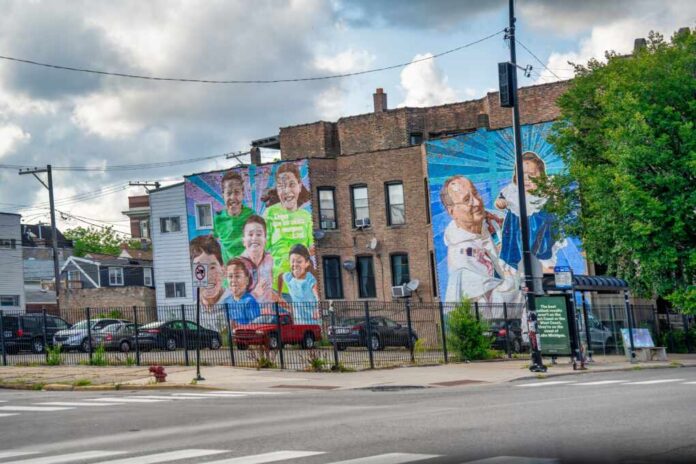
Federal immigration enforcement actions in Chicago have led to significant economic shifts in Latino communities, particularly in areas like Little Village and Pilsen. Businesses have reported substantial revenue declines and closures, echoing challenges seen during the COVID-19 pandemic.
Story Highlights
- Increased federal immigration enforcement actions have significantly affected Latino communities in Chicago.
- Businesses in affected areas are experiencing closures and revenue declines due to residents’ apprehension about public spaces.
- Local officials have requested investigations into the tactics used during these enforcement operations.
- Protests have occurred in response to perceived federal overreach and intimidation.
Economic Repercussions in Latino Neighborhoods
Renewed federal immigration enforcement efforts have impacted Chicago’s Latino neighborhoods, including Little Village and Pilsen. Businesses in these areas have reported decreased activity, with some experiencing revenue losses of up to 40%. This situation has drawn comparisons to the economic challenges faced during the COVID-19 pandemic, raising concerns about the stability of Latino-owned businesses and the broader community economy.
Federal operations, particularly in areas like Chicago, have reportedly generated apprehension among both undocumented immigrants and U.S. citizens. Reports indicate the use of tactics such as helicopters and chemical agents, contributing to a climate of fear that has influenced public engagement and economic activity across the city.
Community and Official Responses
The nature of these enforcement actions has prompted responses from local officials and community leaders. Illinois Governor J.B. Pritzker has called for an investigation into the tactics employed during the raids, citing concerns about federal overreach. Protests have taken place outside federal facilities, with organizations like the Illinois Coalition for Immigrant and Refugee Rights advocating for immigrant protections and accountability from federal agencies.
Community groups are providing support to residents through “know your rights” campaigns and legal assistance. The ongoing tension between federal and local authorities continues to shape efforts to address immigrant community concerns while maintaining public safety. These events have contributed to the national discussion on immigration policy and the role of sanctuary cities.
Potential Long-Term Effects
The long-term effects of these enforcement actions on Chicago’s Latino communities are a subject of ongoing discussion. Concerns include potential permanent business closures, job losses, and a decrease in community wealth. There are also apprehensions that these actions could lead to increased distrust between immigrant communities and law enforcement, potentially affecting cooperation and community cohesion.
Economists have noted that enforcement targeting large immigrant populations can have significant economic consequences for local areas. Continued enforcement at the current rate could lead to demographic shifts, with residents potentially relocating. The ripple effects on local industries, suppliers, and tax revenues may further impact the city’s economic landscape, prompting calls for a review of enforcement strategies and their broader implications.
Watch the report: How immigration raids make private contractors wealthy | The Chicago Report
Sources:
Officials say federal agents targeted and intimidated Chicago’s Puerto Rican Museum – ICE
As raids ramp up, Chicago’s Latino economy withers
As raids ramp up, Chicago’s Latino economy withers